Click on the sections below to explore and learn more about the EYFS curriculum at St Joseph’s.
We warmly welcome every child to our Early Years Unit. We recognise the unique potential in every child; our Early Years team is dedicated to helping them discover and develop their individual gifts and talents. By fostering a nurturing and stimulating environment, we strive to ensure that every child grows socially, academically, and spiritually, with Jesus at the centre of all we do.
Early Years education forms the foundation of lifelong learning. Our engaging curriculum encourages curiosity, creativity, and a love for discovery, laying the groundwork for confident, independent learners. At St Joseph’s, we are committed to providing a safe, joyful, and enriching environment where your child feels supported and cherished every step of the way.
We work closely with parents, carers, and our parish community to support each child’s growth and development. Our school is deeply connected to the wider Catholic community, and through shared prayer, celebrations, and events, we create opportunities for collaboration and partnership in your child’s education. We believe that by working together, we can ensure your child achieves their fullest potential while growing in faith and love.
We encourage open communication and active involvement in school life, knowing that a strong partnership between home and school is essential for success. Thank you for considering St Joseph’s Catholic Primary School for your child’s education. We look forward to welcoming you and embarking on this exciting journey of faith, love, and learning together!
Nursery
Here at St Joseph’s we have a pre-school nursery which provides a caring, stimulating, and nurturing environment for children aged 3 and 4 years old. We offer Government-funded 30-hour nursery places (subject to eligibility), making high-quality early education accessible to all families. Through a balance of play-based learning and structured activities, we support children’s social, emotional, and physical development helping them build strong foundations for future success.
Our curriculum is carefully designed to prepare children to be school ready, encouraging early reading and mark making, numeracy, communication, and personal skills in a fun and engaging way. Most importantly, we ensure that every child feels happy, safe, and valued as part of our school community.
Reception
Children join us in Reception from our pre-school or other local nursery schools. Within our Early Years Foundation Stage Unit (FS1 and FS2/ Nursery and Reception) our aim is to develop happy, confident and caring young citizens who are well prepared for the future, underpinned by our motto: “Happiness first, all else follows.” (Aristotle)
At St Joseph’s we have two classes in our foundation stage unit: FS1 (nursery) and FS2 (reception).
FS1 (nursery):
Miss Bradshaw- FS1 teacher

Miss Ashworth- FS HLTA

FS2 (reception)
Mrs C Hill- FS2 teacher and EYFS Lead
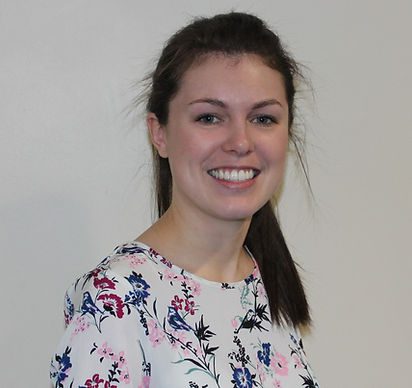
Mrs Di Gasparro- FS2 Teaching Assistant (AM)
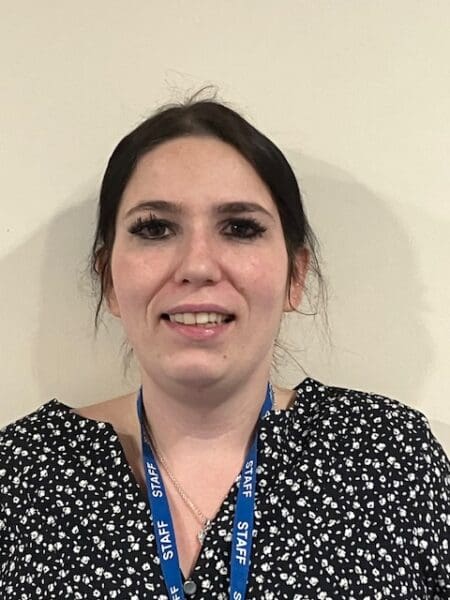
Mrs Dawson- FS2 Teaching Assistant (PM)

For both FS1 and FS2:
Start of the day- 8.45am.
Lunch time- 11.30am-12.30pm
Home time- 3.10pm
Reading books are changed every Monday.
FS2 phonics homework is collected on Wednesday and given out on Thursday.
FS have PE on a Friday, they are to come into school in their PE kit on this day instead of school uniform.
FS1 (nursery) Class Saint is St Joseph.
In FS1, we find out about St. Joseph and why he is so special. St Joseph was a kind and caring man who worked hard and loved Jesus as his own son. We try to live like St Joseph by Caring, Sharing and Helping each other.
FS2 (reception) Class Saint is St Francis of Assisi.
In FS2, we find out about St. Francis and why he is so special. St Francis gave up all he had and gave to others. St Francis loved animals and cared and looked after all creatures great and small.
The phonics programme we use at St Joseph’s is Read, Write Inc. Please use the following link for more information on how you can support your child at home:
Read, Write Inc learning at home
At St Joseph’s Catholic Primary School, we adhere to the Early Years Foundation Stage (EYFS) statutory framework and incorporate the principles of Development Matters. These guidelines ensure our youngest learners receive a high-quality, play-based education that fosters their development and prepares them for future learning.
Through a balanced approach, we nurture each child’s heart, mind, and spirit, staying true to our mission.
Click on the Following Links for More Information
Assessment in the Early Years Foundation Stage (EYFS)
National Framework
In the Early Years Foundation Stage (EYFS), assessment is a critical component to ensure that children receive the best possible start to their education. Nationally, the assessment framework for EYFS is designed to support children’s development and learning by providing a clear structure for measuring progress and identifying areas where additional support may be needed.
The EYFS Profile
The primary national assessment tool for children in the EYFS is the EYFS Profile. The EYFS Profile is completed in the final term of the year in which the child turns five, typically at the end of the Reception year. This assessment summarises and describes children’s attainment at the end of the EYFS.
Areas of Learning
The EYFS Profile assesses children’s achievements in the following areas:
- Communication and Language
- Listening and Attention
- Understanding
- Speaking
- Physical Development
- Moving and Handling
- Health and Self-Care
- Personal, Social, and Emotional Development
- Self-Confidence and Self-Awareness
- Managing Feelings and Behaviour
- Making Relationships
- Literacy
- Reading
- Writing
- Mathematics
- Numbers
- Shape, Space, and Measures
- Understanding the World
- People and Communities
- The World
- Technology
- Expressive Arts and Design
- Exploring and Using Media and Materials
- Being Imaginative
Early Learning Goals (ELGs)
For each area of learning, there are specific Early Learning Goals (ELGs) which set out the expected level of development that most children should reach by the end of the EYFS. Teachers assess each child against these goals, determining whether they are:
- Emerging: not yet reaching the expected level.
- Expected: meeting the expected level.
- Exceeding: surpassing the expected level.
The Reception Baseline Assessment (RBA)
Starting in the academic year 2021/2022, the Reception Baseline Assessment (RBA) was introduced as a statutory assessment for all children in Reception. This assessment takes place within the first six weeks of children starting school and serves as a baseline to measure the progress children make from the start of Reception to the end of Key Stage 2.
Key Features of the RBA
- Focus Areas: The RBA focuses on early literacy, communication, and mathematics skills.
- Format: It is a short, interactive assessment carried out one-on-one with a teacher or practitioner.
- Purpose: The RBA is not intended to provide a comprehensive picture of a child’s abilities but to establish a starting point for measuring progress throughout primary school.
- Non-Obtrusive: Designed to be a low-pressure assessment, it fits seamlessly into the child’s normal school day.
The results of the RBA are used to create a baseline measure for each child, which will help track their progress across their primary education journey. These results are not shared with parents or used to label or track individual children within the school.
Observational Assessment
A key aspect of EYFS assessment is observational assessment based on the Characteristics of Effective Learning. Our staff observe children as they act and interact in their play, everyday activities, and planned activities, and they use these observations to understand each child’s development and learning needs. Observational assessment is continuous and forms the basis of the formative assessment process.
WellComm Assessments
We use WellComm to assess all children’s speech, language and communication in our Early Years Unit (FS1 and FS2). Parents and carers will be informed of their child’s outcome three times a year.
Reporting to Parents
Parents are provided with a written summary of their child’s attainment against the ELGs, along with commentary on the characteristics of effective learning at the end of the Reception year. This report helps parents understand how their child is progressing and provides them with insights into how they can support their child’s learning at home.
Implementation in Our School
At St Joseph’s, we are committed to implementing the EYFS assessment framework effectively to support every child’s learning journey. Our approach includes:
- Ongoing Observations: We conduct ongoing observations to capture children’s achievements and inform our planning.
- Parental Involvement: We actively involve parents in the assessment process through regular stay and play and communication via Seesaw
- Professional Development: Our staff engage in continuous professional development to ensure they are skilled in conducting accurate and meaningful assessments.
- Inclusive Practices: We tailor our assessment practices to ensure they are inclusive and cater to the diverse needs of all our children.
By adhering to the national EYFS assessment framework, including the RBA, and implementing best practices within our school, we strive to provide a supportive and enriching learning environment that promotes the holistic development of every child.
Click here to explore Starting Reception, a helpful website for parents and carers preparing their children for the transition into primary school.